Skip to content
← ALL WORK
( CASE STUDY )02 — HOMEWARE & LIFESTYLE RETAIL

Rowan & Ash

A wide shelf that still reads as an edit.

Rowan & Ash is a curated homeware shop—lighting, ceramics, furniture, textiles, objects, and a seasonal edit, from a sixty-five dollar candle to a twenty-eight hundred dollar dining table. The concept works on the problem that breadth creates: how a shop carrying six unrelated categories keeps sounding like a buyer with a point of view rather than a marketplace listing whatever it can source.

INDEPENDENT CONCEPTView live concept ↗

( WHY WE BUILT THIS )

Kairos tested a specialist storefront with four references and a slow purchase. Rowan & Ash tests the opposite pressure. Once a catalogue spans six categories and a forty-fold price range, the usual answer is a category tree and a search bar, and the shop stops sounding like anyone. We built this to find out how much editorial structure it takes to hold breadth together.

Independent concept project. The shop, makers, pieces, prices, and contact details are illustrative and were created to demonstrate Vanto’s approach.
PROJECTIndependent concept
ROLECommerce strategy, art direction & development
TYPECurated homeware storefront
STATUSLive concept
Rowan & Ash homeware storefront homepage
maison-furnitures.vercel.app

( AT A GLANCE )

Room-led
ENTRY AND FRAMING
Filtered
SINGLE CATALOGUE VIEW
Material
PRODUCT ARGUMENT
Sourced
BUYER’S STORY
01 — THE PREMISE

Lead with the room, not the shelf.

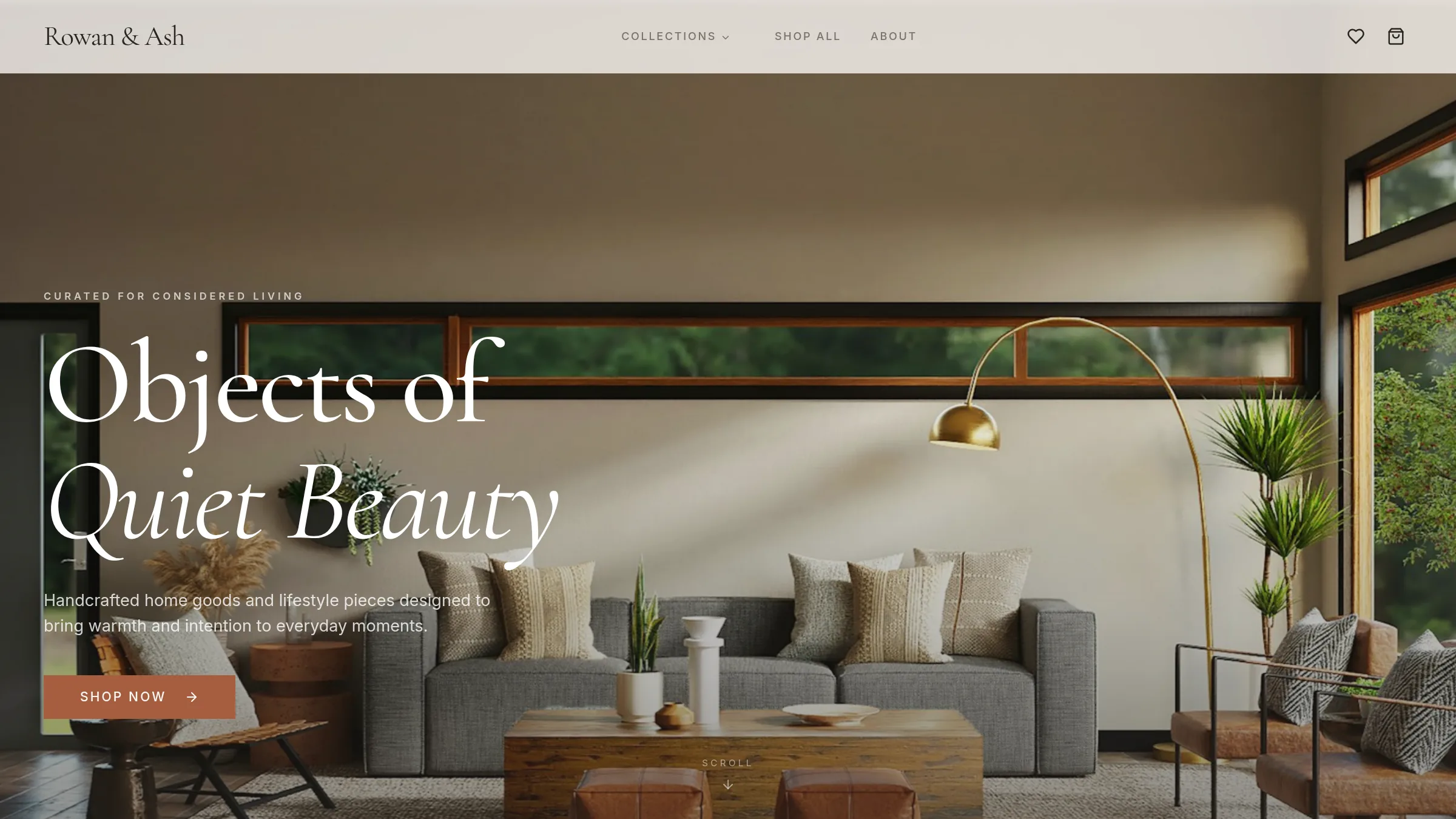
The homepage opens on a lived-in interior and a single line—objects of quiet beauty—rather than a grid of best sellers. A shop selling considered homeware is not selling a lamp; it is selling the room the lamp belongs in, and a visitor decides whether that room is theirs long before they compare prices. Products arrive further down, once the argument for the shop has been made.

Rowan & Ash homepage with a full-bleed interior photograph and editorial headline
02 — THE CATALOGUE

Six collections that still read as one shop.

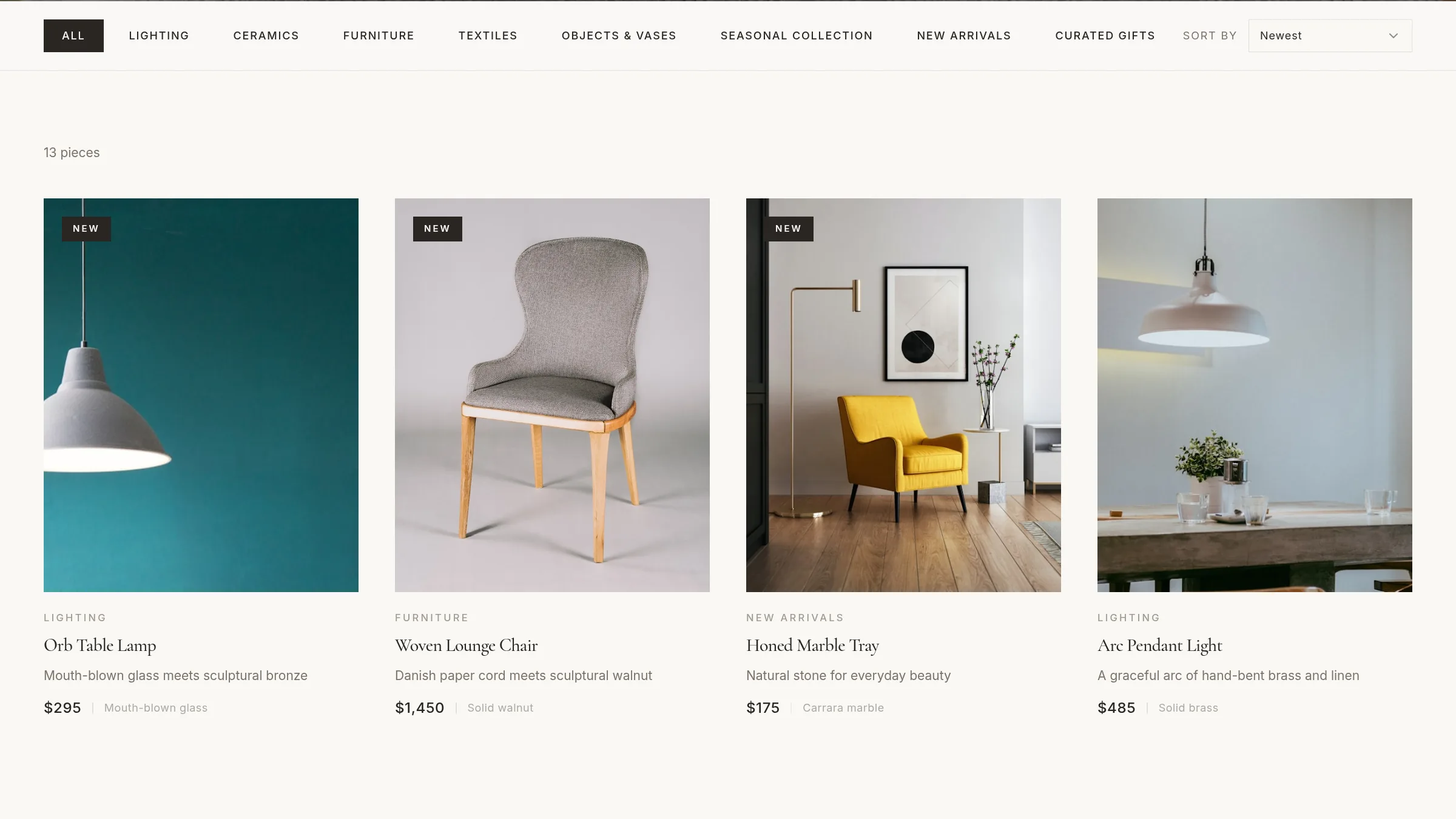
Rather than splitting the catalogue into six category pages, everything lives on one shelf and the collections act as filters over it—lighting, ceramics, furniture, textiles, objects, seasonal, plus new arrivals and gifts. Every card carries a single line of material writing under the name, so the grid reads as an edit with a voice rather than a list of results, and a visitor who came for a vase leaves having seen the chair.

Rowan & Ash shop listing with collection filters and product cards
03 — THE PRODUCT PAGE

Make the argument from the material.

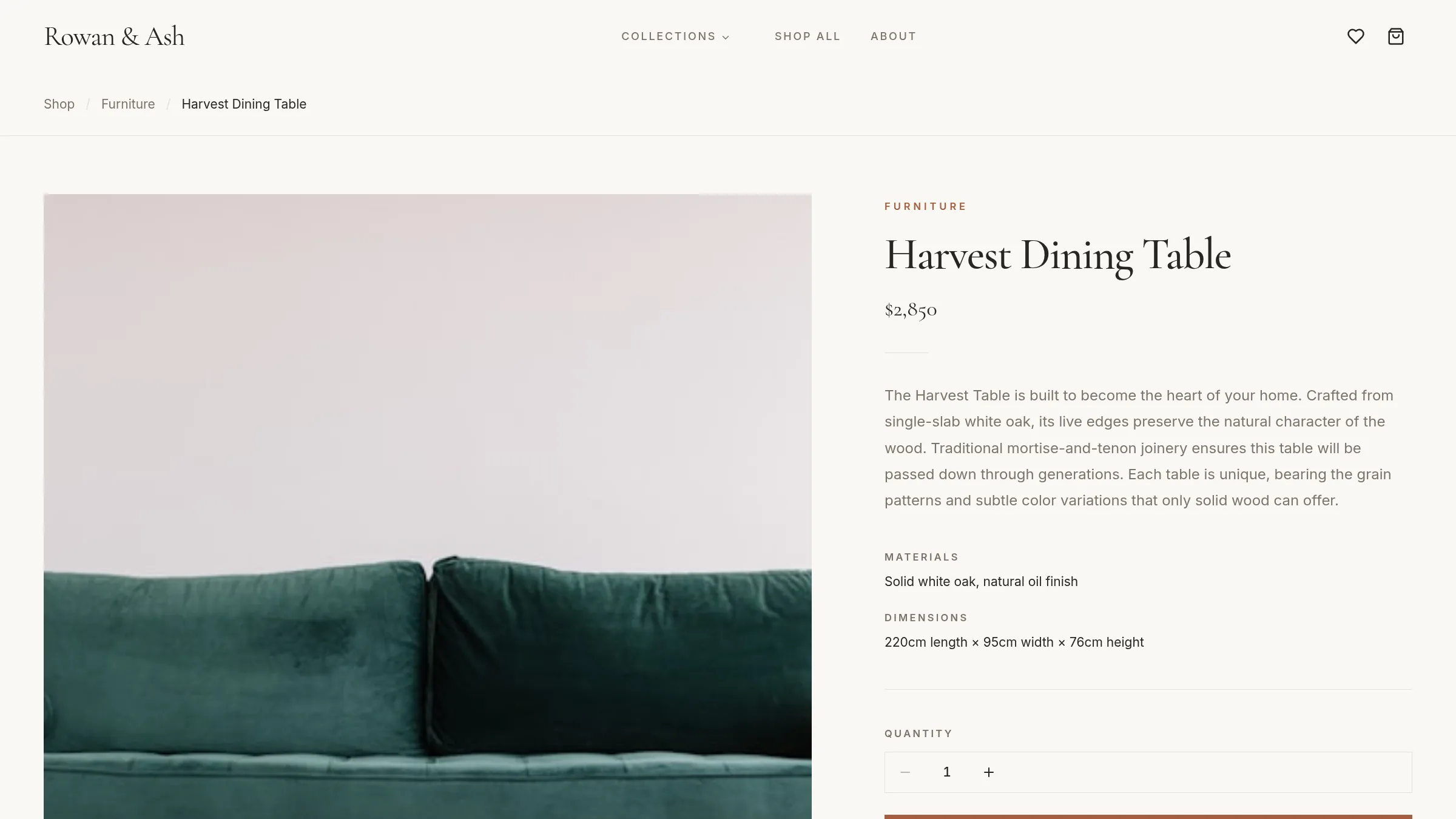
At the top of the range the customer is committing to an object they expect to keep, so the page leads with species, finish, joinery, and dimensions—solid white oak, mortise-and-tenon, 220 by 95 centimetres—before it asks for the sale. Shipping and returns sit on the same screen rather than at the end of a checkout, because for a piece of furniture the delivery terms are part of the decision, not the paperwork after it.

Rowan & Ash product detail page for a solid oak dining table
04 — THE BUYER

Curation only counts if someone is doing it.

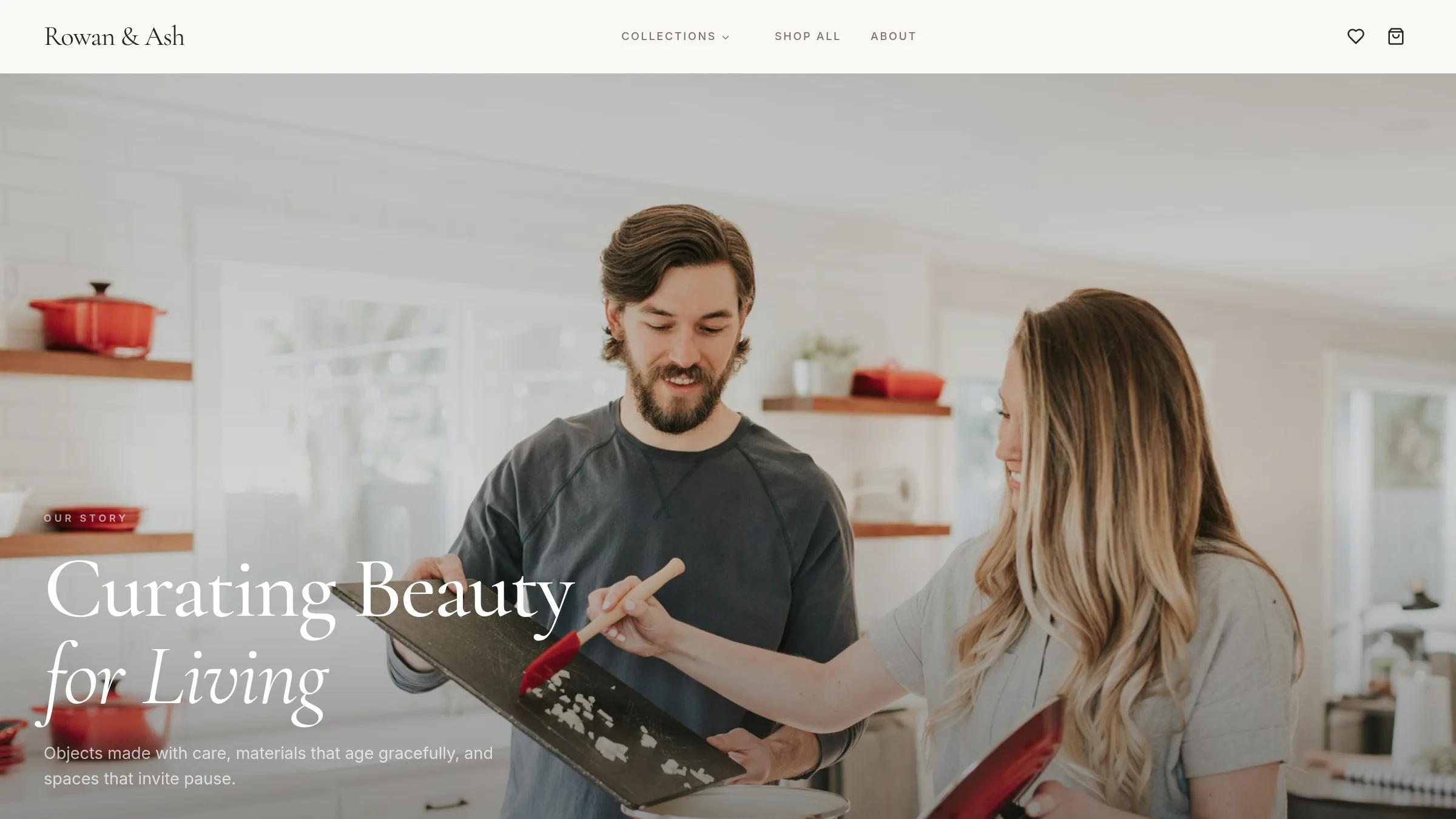
A shop that calls itself curated has to say who is curating and on what grounds, or the word does no work. The story page names the position—workshop visits, makers met, pieces handled before they are listed—and sets it against three stated values rather than a mission statement. It is the page that licenses the price of the furniture and the restraint of everything else.

Rowan & Ash about page with an editorial portrait and story headline

( WHAT IT DEMONSTRATES )

A complete storefront spanning six collections and a forty-fold price range, held together by one filtered catalogue view, material-led product pages, and a buyer’s story that earns the word curated. It settled how far editorial voice can carry breadth before a shop needs to fall back on a category tree.